

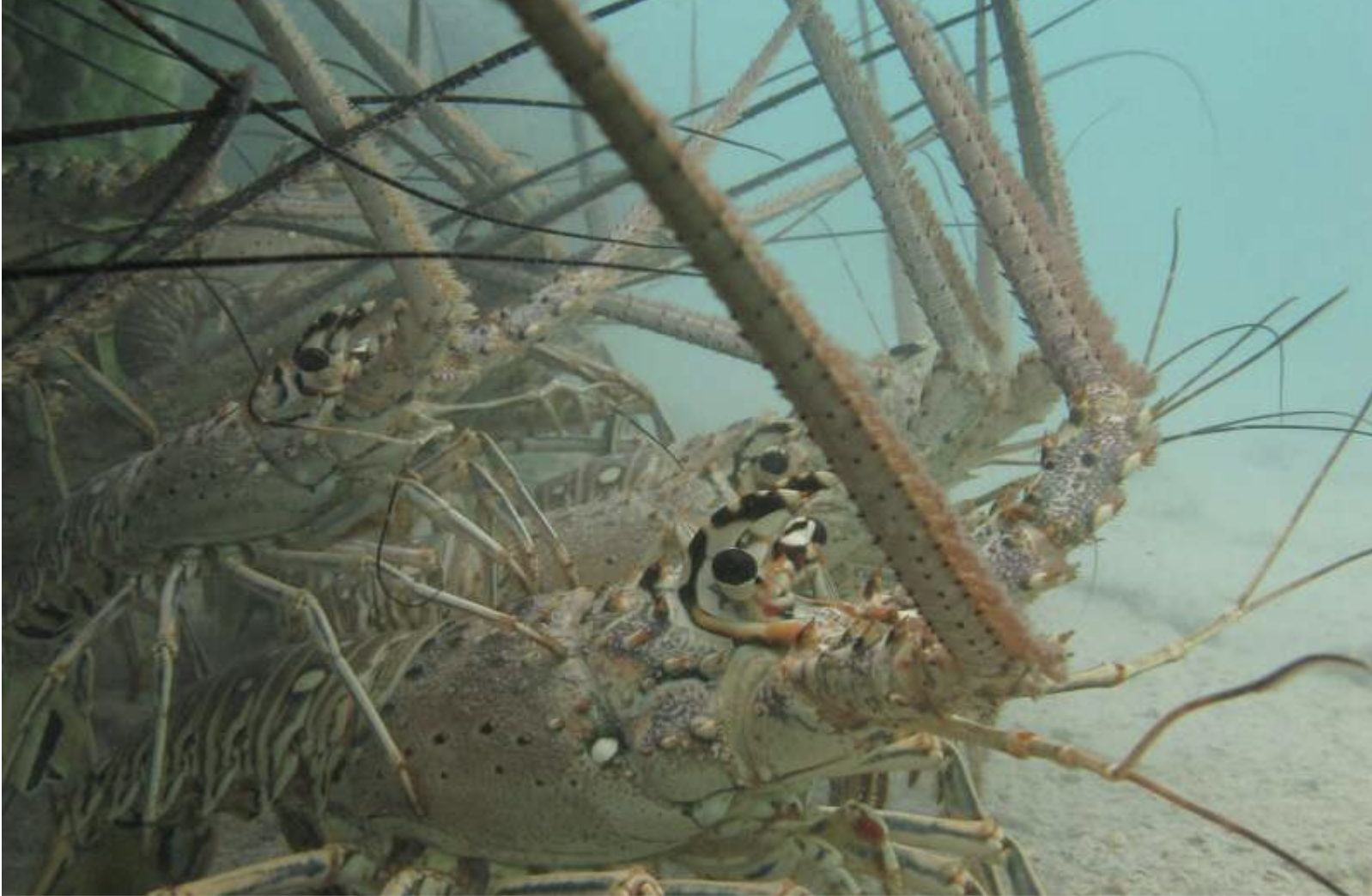
A new study could help authorities better anticipate changes affecting the island’s lobster population and support the long-term management of the fishery sector.
The collaborative study by the Department of Environment and Natural Resources and the Bermuda Institute of Ocean Sciences saw researchers analysing the department’s long-term fisheries records, satellite data and ocean observations collected by ASU BIOS.
The index can help DENR to identify changing conditions earlier and consider appropriate management responses.
The teams examined how conditions in the wider North Atlantic Ocean affect the number of young lobsters reaching local waters.
The study, which was published in the scientific journal Communications Earth & Environment, was led by researcher Leocadio Blanco-Bercial of ASU BIOS, in collaboration with DENR’s marine resources staff
Bermuda’s lobster catch has declined over the past decade despite longstanding management measures that support fishery sustainability, including protections for breeding females and juvenile lobsters, BIOS said.
Since lobster larvae spend nine months in the open ocean before the juveniles settle in coastal habitats, local regulations cannot protect them.
The larvae survival depends on “favourable ocean conditions” and sourcing enough plankton to feed on.
Using the data, researchers developed an index to track changes in ocean conditions and the plankton food chain and link those changes to the supply of larvae available to replenish Bermuda’s spiny lobster population.
The index explained changes in lobster catch rates better than predictions based on previous catch levels, ocean temperature or other available environmental measures.
Jaché Adams, the Minister of Public Works and Environment, said: “Bermuda’s fisheries are important economically and culturally, and we have a responsibility to ensure they are managed sustainably for future generations.
Read more here: https://www.royalgazette.com/environment/news/article/20260909/study-puts-spotlight-on-islands-lobster-population/