

The Royal Gazette – Fae Sapsford – September 11, 2026
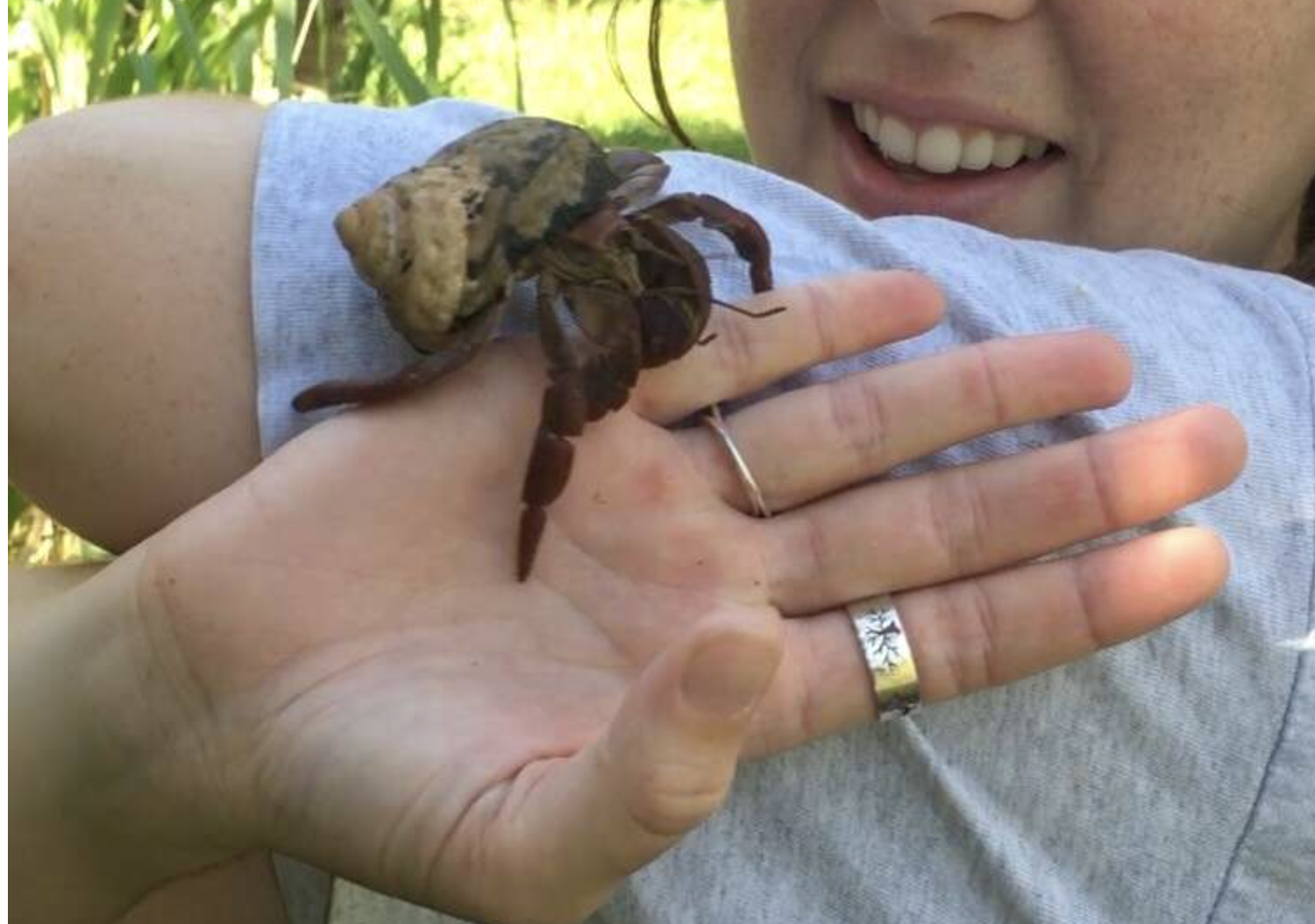
Land hermit crabs are now extremely rare in Bermuda. To see one is a delight — the heavy white shell bumbling through the grass atop strong red legs. These slow-moving invertebrates are iconic symbols of the coastal ecosystem that makes up so much of Bermuda — its beauty and its fragility.
The land hermit crab story is intertwined with the West Indian top shell story. These large molluscs were extirpated from Bermuda by early settlers who harvested them for food. Hermit crabs declined with the decline of top shells because they need to collect shells from the surrounding environment to protect their soft bodies. West Indian top shells are the only shells available in Bermuda that are large enough to protect an adult hermit crab. For a while the crabs were able to get by using the few remaining fossilised top shells, but eventually these ran out.
It got to a point where some hermit crabs were using trash such as plastic containers and glass bottles to protect themselves. Eventually, they simply faded from the ecosystem. Their way of life was no longer possible.
Hermit crabs themselves have been protected in Bermuda since 2012. However, anecdotally, their recovery has been extremely slow. I remember seeing a few hermit crabs at Devonshire Bay as a child, then none at all for most of my life. However, in the past two years, I have had the fortune of about half-a-dozen hermit crab sightings around Cooper’s Island. There was once a time when these creatures were so numerous that Bermudians would take them home as pets.
Hermit crabs are a reminder of the connection between land and sea, between us and the ocean. While hermit crabs live most of their lives on land, they release their eggs into the ocean — they start their lives as free-floating larvae, scintillating through the planktonic soup of the high seas. With great determination, they float their way back to the shores of Bermuda, from seas thousands of metres deep, to shallows, and crawl out of the water to begin the second part of their life in Bermuda’s coastal forests.
Land hermit crabs experience ocean wandering at the most extreme level, and the feeling of grass beneath their feet. They can go from the open ocean to climbing trees within one lifetime. To protect them means protecting varied ecosystems across their highly migratory life cycle.
Bermuda’s waters are full of stories like this — of species with life cycles of unimaginable complexity. These stories add up to create Bermuda’s greatest natural resource: the ocean, which shapes our culture and way of life.
Read more here: https://www.royalgazette.com/opinion-writer/opinion/article/20260911/fae-sapsford-protecting-our-greatest-natural-resource-the-ocean/